Tenant improvement refers to construction work performed within a leased commercial space to customize it for a specific tenant's business, including interior walls and flooring, electrical upgrades, plumbing modifications, HVAC zoning, and finish-outs. These buildouts are negotiated as part of the commercial lease. They are typically funded through a tenant improvement allowance paid by the landlord, though the scope, cost, and schedule of the actual construction work are where most tenants run into trouble. On franchise and hospitality projects in particular, the construction side of tenant improvement is what determines whether a tenant opens on time, stays on budget, and meets their brand's opening standards.
What Tenant Improvement Actually Covers
Tenant improvement construction, often shortened to TI, is the physical work required to transform a shell space or an existing commercial unit into a functional space for a specific business. A vanilla shell from a landlord is essentially a concrete slab, exterior walls, a roof, and stubbed utilities. Everything that happens after that point to make the space usable falls under tenant improvement.
The scope varies dramatically based on the business type. For a quick-service restaurant franchise, TI typically includes grease traps, specialized exhaust hoods, walk-in coolers, dedicated electrical service for kitchen equipment, finish flooring that meets brand standards, branded signage, and full kitchen and dining buildouts. For a boutique hotel on a retail conversion, this might involve structural modifications, elevator installation, plumbing for guest rooms, a full MEP redesign, and life-safety systems. For a professional office, the work can range from simple demising walls, carpet, paint, and lighting upgrades to a full interior rebuild with conference rooms, server closets, and private restrooms.
What every tenant improvement project has in common is that the work is being done inside a building the tenant does not own, on a schedule tied to a lease commencement date, and to standards that must satisfy both the landlord and whatever brand or operational requirements the tenant is working under. Those three constraints shape every decision the general contractor makes on the project.
Tenant Improvement vs Leasehold Improvement vs Buildout
These three terms overlap significantly and are often used interchangeably, which creates confusion for tenants signing their first commercial lease.
Tenant improvement is the operational term used during construction and in lease negotiations to describe the work the tenant is performing or paying for. Leasehold improvement is the accounting and tax term for the same work once it is capitalized on the tenant's books; the IRS and lease accounting standards, such as ASC 842, use this language. Buildout is the informal catch-all term used in everyday conversation, typically to describe the visible, user-facing portion of the work — the dining room, the guest suites, the retail floor. All three describe essentially the same construction category, viewed through different professional lenses.
For a commercial tenant, the practical distinction matters at two points: when negotiating the lease, where the term "tenant improvement" drives the dollar allowance and the scope of work definition, and at tax time, where leasehold improvements drive the depreciation schedule and potential deductions.
How Tenant Improvement Allowances Work
A tenant improvement allowance, also called a TI allowance or TIA, is the amount the landlord agrees to contribute toward the buildout. It is typically expressed as a dollar figure per square foot, such as fifty dollars per square foot across a five-thousand-square-foot space for a total allowance of two hundred fifty thousand dollars.
Allowances vary widely by market, property type, and lease term. A long lease for a high-credit tenant in a competitive market will attract a much larger allowance than a short lease for an unknown tenant in a market with high vacancy. Franchise tenants operating under national brand standards often need to negotiate allowances that reflect the real cost of meeting those standards, which, for a QSR, can easily exceed $200 per square foot in total hard costs once brand-specific equipment and finishes are factored in. For more on this, see Restaurant Construction: Building a QSR from Scratch.
The structure of the allowance matters as much as the dollar amount. Some landlords fund the allowance directly by hiring the general contractor themselves, a structure known as a turnkey buildout. Others reimburse the tenant after the work is completed, which requires the tenant to front the entire construction cost and wait for reimbursement against receipted invoices. A third model has the landlord pay the contractor in draws as work progresses. Each structure has different cash-flow implications and different risks if the project goes over budget, and tenants should understand which structure their lease specifies before signing.
The Tenant Improvement Construction Process
A well-run TI project follows a predictable sequence, though the compressed timelines on retail and franchise buildouts leave no room for missed steps.
The process begins with space planning and design, typically led by an architect or a design-build contractor, who translates the tenant's operational requirements into construction drawings. For franchise tenants, this step includes reconciling the brand's prototype drawings with the specific landlord's building conditions, which almost always surface conflicts that need resolution before permitting.
Permitting follows design and is often the longest single phase of the project. Commercial TI work requires review by the local building department, and in many jurisdictions, by health, fire, and zoning departments. As well, restaurant and hospitality projects add another layer of review that can extend permitting by weeks or months. Experienced commercial general contractors begin the permit process in parallel with final pricing to avoid delays.
Construction itself moves in phases: demolition of any existing improvements, rough-in of MEP systems, framing of new walls, drywall, finishes, and final fixture installation. In a typical restaurant buildout, the schedule runs between 3 and 6 months from permit issuance to certificate of occupancy. Hotel conversions and full ground-floor retail-to-hospitality transformations can take 12 to 18 months. The landlord's delivery of the space in the agreed condition drives when this clock starts, which is why lease negotiations should specify exactly what condition the space must be in before the tenant's construction can begin.
Final inspections, certificate of occupancy, and tenant move-in complete the project. For franchise tenants, there is often an additional brand walkthrough after the certificate of occupancy, where the franchisor verifies that the space meets brand standards before opening day.
What Tenants Should Know Before Signing a Lease
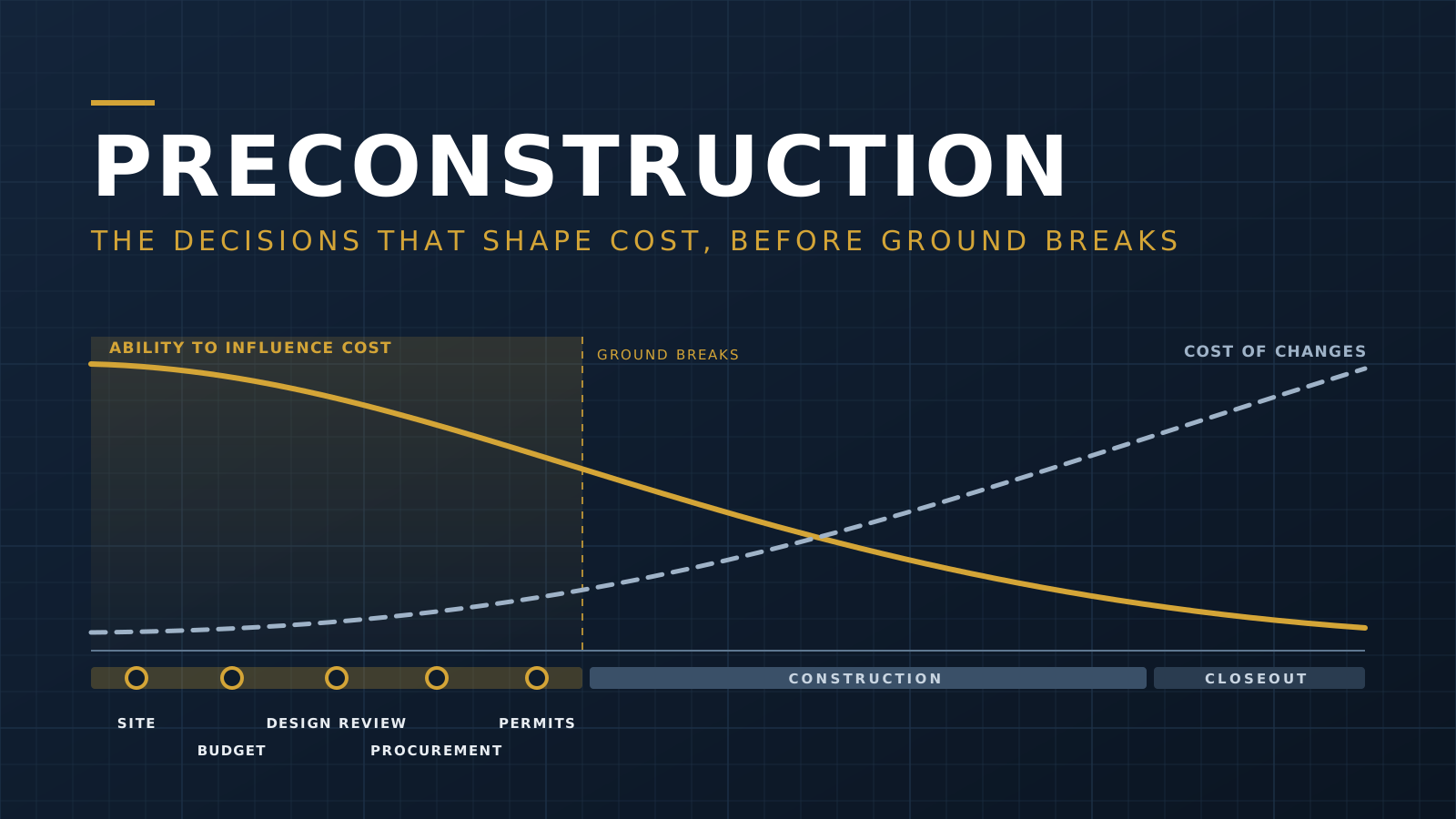
The most consequential tenant improvement decisions happen before the lease is signed, not after. A qualified commercial general contractor brought into the process early can review the space, flag hidden cost drivers, and help the tenant negotiate lease terms that accurately reflect the buildout cost.
Three items deserve special attention during lease negotiation. The first is the condition of the landlord's delivery, which should be defined with enough specificity that there is no dispute later about whether the HVAC needs replacement or whether the electrical service is adequate. The second is the allowance structure, which should be matched to the tenant's cash position and risk tolerance. The third is the landlord delivery schedule, because a delay on the landlord's side cascades directly into the tenant's opening date and can trigger rent obligations before the business generates any revenue.
For franchise and hospitality tenants, the brand's prototype and opening calendar add another dimension. A QSR franchise agreement with a target opening date leaves very little flexibility, and any delay on the TI side directly affects royalties, marketing spend, and brand relationship. Working with a general contractor who has actually built for that brand before compresses the learning curve and surfaces the landlord-negotiation issues that generic contractors miss.
Why Tenant Improvement Is Different from New Construction
Tenants sometimes assume that TI work is simpler than new construction because the building already exists. In practice, the opposite is often true. Working inside an occupied or partially occupied building means coordinating around other tenants' operating hours, managing noise and dust restrictions, hauling materials through shared corridors and freight elevators, and discovering existing conditions that were not accurately reflected in the landlord's as-built drawings. A slab elevation that is two inches off, an electrical panel that is undersized, or a sprinkler system that needs reconfiguration are problems that do not occur in ground-up construction but do appear routinely in TI.
This is why the selection of the general contractor matters more on a tenant improvement project than on most other commercial work. A GC who has executed dozens of franchise rollouts, hotel conversions, or retail buildouts will anticipate these conditions, price them into the bid, and solve them in stride. A GC without that pattern recognition will find them mid-project, which is when schedule and budget come apart.
Tenant improvement is where lease economics meet construction reality. Understanding the full process, not just the allowance dollars, is what separates tenants who open on time from those who do not.