Construction management services are a project delivery method in which a dedicated construction manager acts as the owner's representative throughout the entire building process — from preconstruction planning through final occupancy. Unlike a traditional general contractor who holds all the risk and contracts with subcontractors independently, a construction manager works directly for the owner, providing transparency across budget, schedule, subcontractor selection, and quality control. For commercial property owners managing complex builds, renovations, or multi-site rollouts, construction management is often the delivery method that keeps projects on time, on budget, and built to the right standard.
Construction Management vs. General Contracting: What's the Difference?
The most common question project owners ask is whether to hire a construction manager or a general contractor. The distinction comes down to who carries the financial risk and who controls the flow of information.
With a traditional GC, the owner pays a fixed contract price and receives a finished product — but has limited visibility into how subcontractors are selected, what the actual cost breakdown looks like, or where the schedule is absorbing delays. When problems arise, the owner is at arm's length from the information needed to make good decisions.
With construction management services, the structure changes. The construction manager contracts directly with subcontractors on behalf of the owner, maintains full cost transparency, and charges a fee for their management services rather than a markup embedded in an opaque lump sum. The owner sees the actual bids, the actual invoices, and the actual schedule data — giving them the ability to make real-time decisions that protect their investment.
The practical difference comes down to alignment. A GC's incentive is to deliver within their contract price and maximize their margin. A CM's incentive is to deliver the best outcome for the owner, because their fee is tied to performance, not to the gap between subcontractor bids and what the owner pays.
The Two Main Types of Construction Management
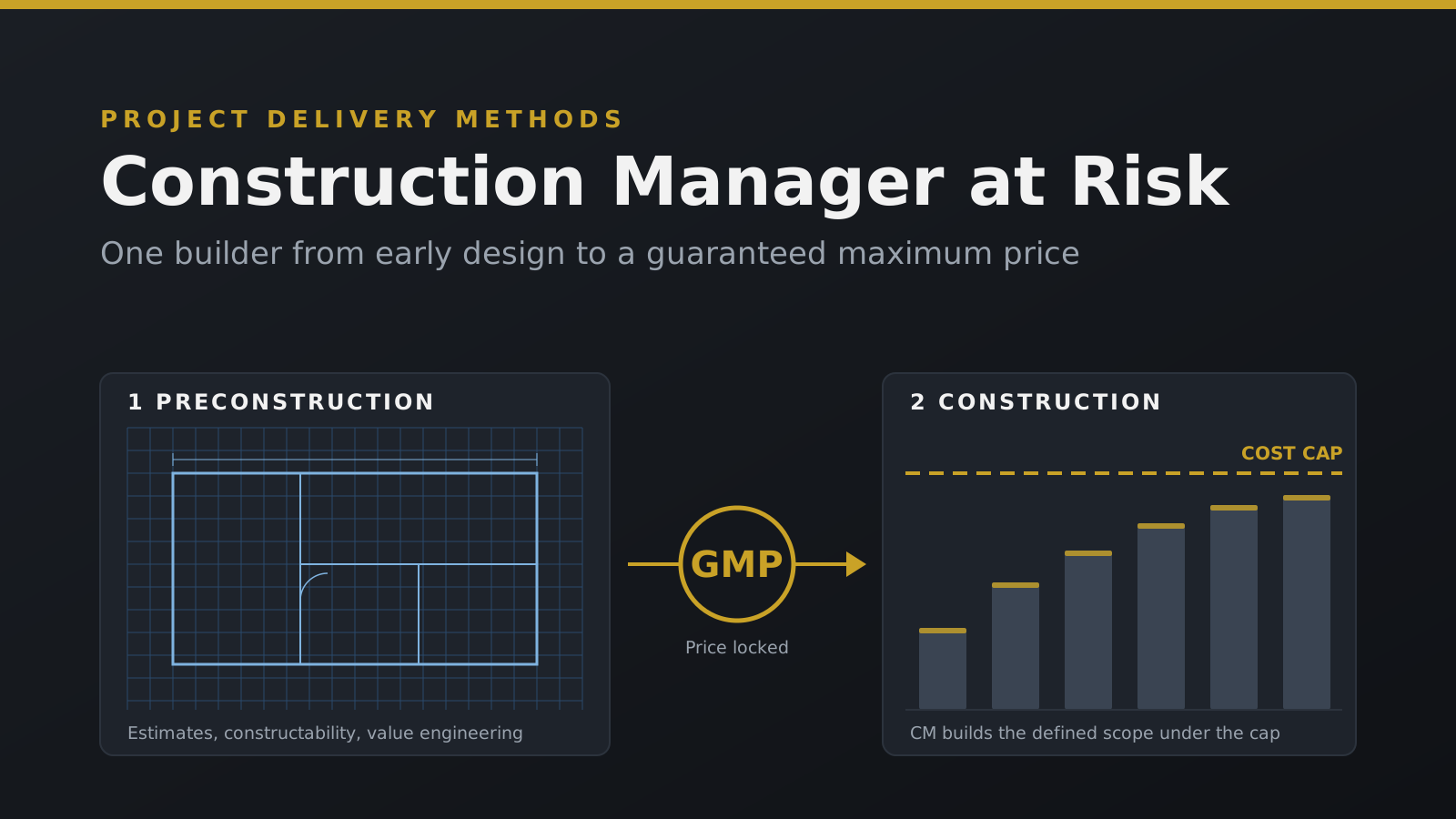
Construction Management at Risk (CMAR or CM at-Risk) is a delivery method in which the construction manager assumes financial responsibility for completing the project within a guaranteed maximum price (GMP). The CM advises the owner during preconstruction, then transitions into the constructor role during the build. This model is commonly used on complex commercial, institutional, and hospitality projects where early contractor involvement improves design and reduces costly surprises.
Construction Management as Agent (Agency CM or Owner's Representative) is a delivery method in which the construction manager acts solely as the owner's advisor and never holds construction risk. The owner holds subcontractor contracts directly, maximizing transparency and control. Agency CM is a strong fit for sophisticated owners with in-house real estate or development staff who want a trusted expert managing day-to-day operations without giving up contract control.
What Does a Construction Manager Actually Do?
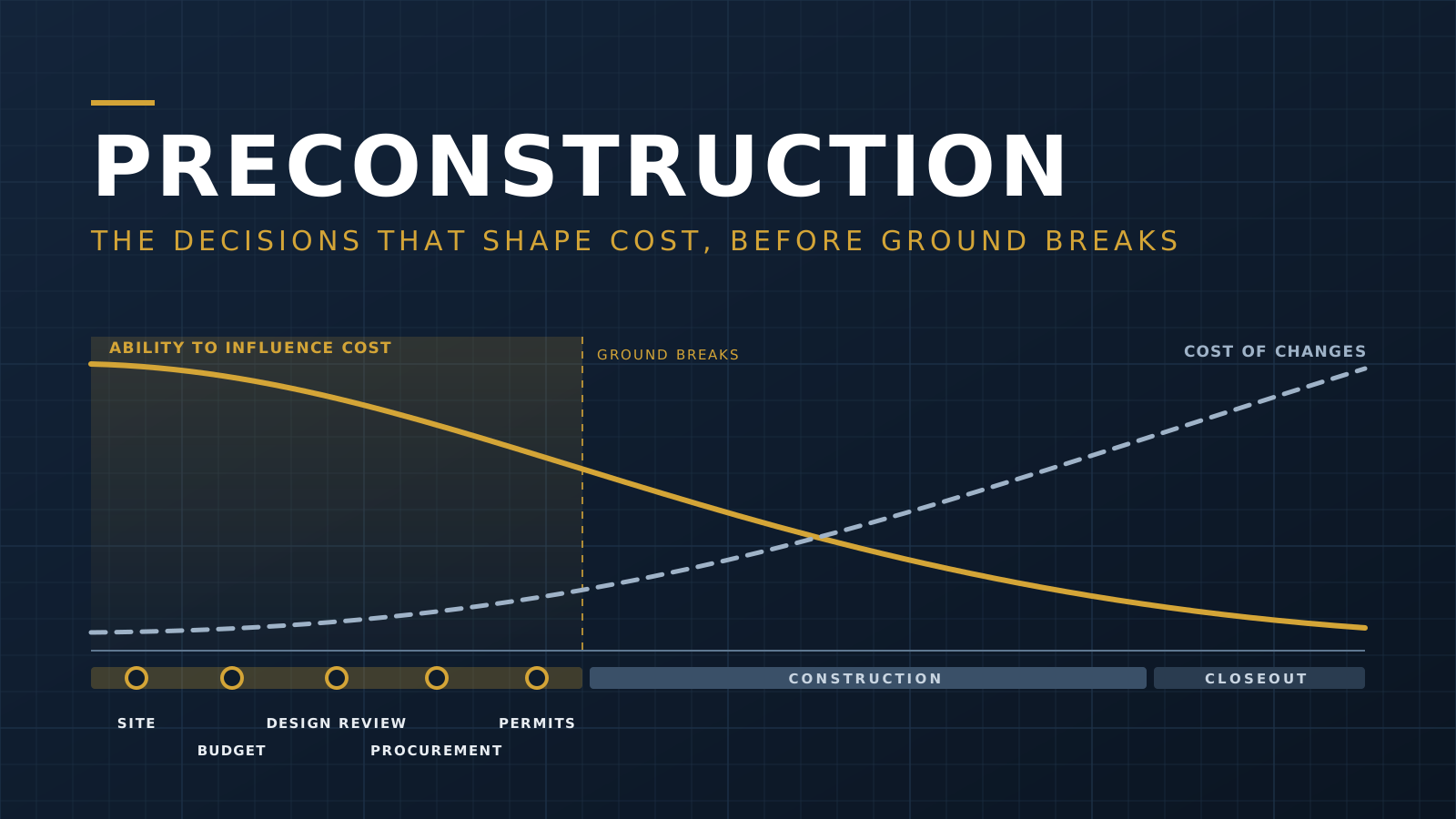
Construction management services span the full project lifecycle, and the value compounds most during preconstruction — before a single shovel hits the ground.
During preconstruction, the CM works alongside the design team to review drawings for constructability, identify long-lead items requiring early procurement, develop detailed cost estimates, and build a master project schedule. On a restaurant build-out or hotel renovation, this phase determines whether the project opens on time or runs three months over. A CM who catches a conflict between the mechanical rough-in and kitchen equipment specifications during design review prevents a costly change order during construction. A CM who doesn't is the reason projects blow their budgets.
During construction, the CM serves as the day-to-day point of contact between the owner and the field — managing the subcontractor bid process, coordinating the schedule across all trades, processing submittals and RFIs, tracking costs against budget, and managing owner-furnished items like FF&E deliveries and installation sequencing.
During closeout, the CM coordinates inspections, punch list completion, certificate of occupancy, warranty documentation, and owner training. For hospitality and restaurant clients, a well-managed closeout means staff training begins on schedule and revenue starts on the planned date.
When Construction Management Services Make Sense
Project complexity is the primary driver. A straightforward tenant improvement doesn't necessarily need a dedicated construction manager. But a hotel renovation while the property stays open, a restaurant franchise rollout across five markets, or a ground-up commercial development with a compressed timeline — these are the projects where the cost of construction management is recovered many times over through schedule savings, reduced change orders, and subcontractor accountability.
Owner capacity matters as well. A restaurant group expanding into new markets or a hospitality brand managing a portfolio renovation is rarely structured to oversee construction at the detail level required. A construction manager extends the owner's capacity without requiring them to build an internal construction team.
Franchise and brand compliance adds another layer that construction management handles well. A CM with franchise experience knows how to navigate brand approval processes, avoid non-compliant substitutions, and keep the project on schedule even when the brand's review cycle adds time to the queue.
How Construction Management Fees Are Structured
CM fees typically range from 3% to 8% of total construction cost, depending on project size, complexity, and scope of services. The most common misconception is that the CM fee makes a project more expensive than using a general contractor. In practice, the opposite is often true.
A GC's markup on subcontractor costs is embedded in the contract price and invisible to the owner. A CM's fee is transparent, and the owner has direct access to subcontractor bids. On a project with $3 million in subcontractor costs, a 15% GC markup costs $450,000. A CM fee of 6% on the same cost base is $180,000, and the owner keeps $270,000 in savings while gaining full cost transparency.
The real financial benefit goes beyond the fee comparison. It shows up in reduced change orders, schedule savings that prevent delayed openings, and subcontractor accountability that prevents costly rework. For hospitality clients, a single week of delayed opening can represent more lost revenue than the entire CM fee.
Preconstruction Services: Where Construction Management Earns Its Fee
Project owners who engage a construction manager only after drawings are complete have already missed the window where CM involvement delivers the greatest return.
Early cost modeling during schematic design gives the owner a realistic budget while design changes are still inexpensive to make. By the time construction documents are complete, the cost of changes has multiplied. By the time the project is under construction, changes are measured in change orders.
Long-lead procurement during preconstruction protects the schedule. Commercial kitchen equipment, custom millwork, specialty lighting, and structural steel can carry lead times of 8 to 20 weeks or longer. A CM who initiates procurement before construction begins keeps the schedule intact. A project team that waits until the building is framed to start ordering kitchen equipment is setting up a delayed opening.
Subcontractor prequalification rounds out the preconstruction value. A CM with established trade relationships brings better-quality bids, more competitive pricing, and contractors with a track record on similar project types. For a restaurant owner opening their first location, that network represents years of experience they cannot build on their own.
Construction Management for Hospitality and Restaurant Projects
Hospitality and restaurant projects are opening-date-driven in a way that office or industrial construction typically is not. A hotel that misses its soft opening loses pre-booked revenue that cannot be recovered. A restaurant that opens two months late has already burned through pre-opening payroll without generating sales.
The complexity runs deeper than it appears. A hotel renovation involves simultaneous management of construction scope, FF&E procurement and installation, brand standard compliance, life safety upgrades, and coordination around the operational property to minimize guest disruption. A restaurant build-out requires tight coordination between the general construction scope and a commercial kitchen package that demands dedicated MEP infrastructure.
Construction management in these settings also means managing the handoff between the construction team and the FF&E installation team with precision. FF&E needs to arrive at exactly the right time — after finishes are complete, before the owner takes occupancy — and the CM is responsible for coordinating that sequencing down to the floor and the trade.
Common Mistakes Owners Make Without Construction Management
Scope gaps between drawings and the contract are the most expensive recurring problem. When the design team and the GC aren't actively coordinated during preconstruction, items fall through the cracks. Those gaps surface as change orders during construction, and resolving them costs three to five times what they would have cost during design.
Subcontractor selection based on low bid rather than performance is another common failure. A GC optimizing its own margin has an incentive to select the lowest bids, even from contractors with a history of schedule delays or quality issues. A CM applies different criteria — past performance, financial stability, and capacity are weighed alongside price.
Delays compound. A two-week delay in drywall becomes a four-week delay in painting, which becomes a six-week delay in FF&E installation, which becomes a ten-week delay in opening. A CM tracking schedule at the activity level catches these early, when recovery is still possible.
Why Construction Management Starts on Day One
The full value of construction management services is realized only when the CM is engaged from the start of preconstruction — not brought in after the design is complete, not hired after the GC is already on site. Every phase of a construction project connects to the phases before and after it. Decisions made during design affect subcontractor selection. Subcontractor selection affects the schedule. The schedule determines the opening date. A CM engaged from the beginning sees all of those connections and manages them proactively.
For project owners who have experienced the cost of a poorly coordinated project — the change orders, the delayed opening, the quality issues that required rework — construction management is not an optional service. It is the management infrastructure that makes complex commercial construction manageable.
Ready to Talk About Your Project?
Stonehenge Construction Services provides construction management services for hospitality, restaurant, hotel, institutional, and commercial projects across the Southeast. If you have a project in planning and want to understand how construction management can protect your schedule and budget, contact our team to schedule a consultation.