Commercial construction services typically cover a broader scope than most property owners and developers expect when planning a project. The term is used to describe everything from ground-up builds to tenant improvements to full-scale renovations, and the service package behind each project type varies depending on the delivery method, the contractor, and how early they get involved.
For owners making decisions about their next commercial building construction project, understanding what's actually included prevents scope gaps, missed expectations, and change orders that could have been avoided in planning.
What Is Commercial Construction?
Commercial construction is the design and build of structures intended for business, institutional, or revenue-generating use. That includes office buildings, retail centers, restaurants, hotels, healthcare facilities, warehouses, and institutional projects like schools and government facilities.
Unlike residential construction, commercial building construction is governed by more complex building codes, requires coordination across a wider range of specialty trades, and carries a higher financial and operational stakes for the owner. A restaurant that opens three weeks late loses pre-booked revenue. A hotel renovation that bleeds into peak season affects occupancy for months. The business consequences of a poorly executed commercial construction project go well beyond construction costs.
Types of Commercial Construction Projects
Commercial construction services apply across a wide range of project types. The most common categories include:
Ground-Up Construction — Building on raw or cleared land, from sitework and foundation through shell completion and interior build-out. Ground-up projects are the most complex category, requiring the full scope of preconstruction planning, permitting, structural coordination, and MEP infrastructure.
Tenant Improvement (TI) — Modifying an existing commercial space to fit a new tenant's operational requirements. TI work typically involves demolition, framing, mechanical and electrical updates, finishes, and millwork. Franchise build-outs fall into this category and carry the added layer of brand standard compliance.
Commercial Renovation and Remodeling — Updating or repositioning an existing commercial building while keeping the structure. Commercial building renovation ranges from targeted refreshes to comprehensive repositioning that changes the building's use or expands its footprint.
Institutional and Industrial Construction — Schools, municipal facilities, warehouses, distribution centers, and light manufacturing facilities each have their own code requirements, specialty systems, and coordination demands. Institutional and industrial projects benefit from contractors with specific experience in those sectors, where code compliance and operational functionality are non-negotiable.
What Commercial Construction Services Actually Include
The scope of commercial construction services varies by delivery method, but a full-service commercial contractor typically provides the following across the project lifecycle:
Preconstruction Services
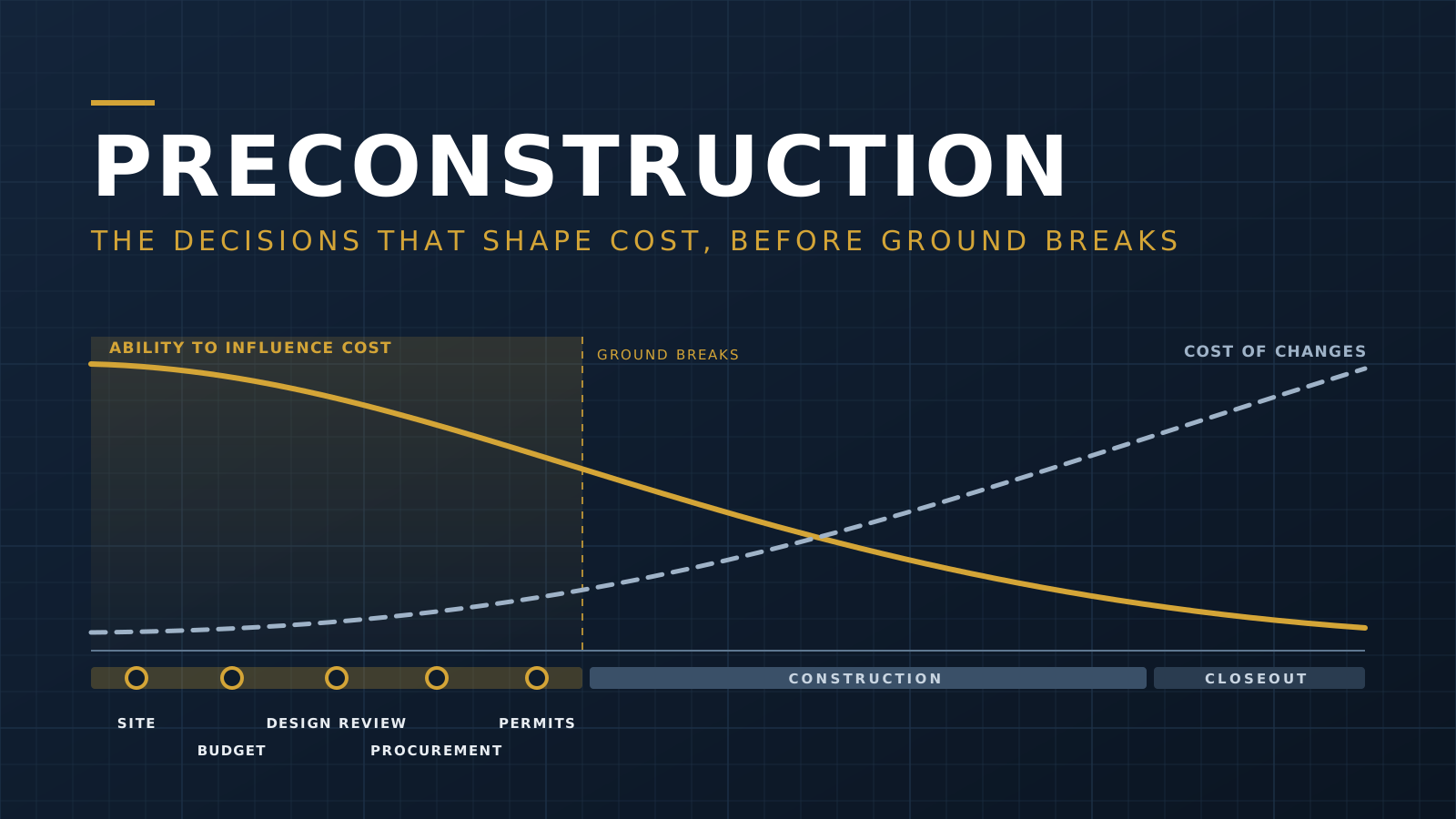
Preconstruction is where projects are either set up to succeed or positioned to struggle. A commercial general contractor engaged during preconstruction brings several critical functions to the table before a shovel touches the ground.
Constructability review involves evaluating design drawings for conflicts, gaps, and coordination issues before they become field problems. A structural-to-MEP conflict caught in preconstruction is a drawing revision. The same conflict found during framing is a change order.
Cost estimating gives the owner a realistic budget while the design is still flexible enough to respond to it. Waiting until construction documents are complete to validate cost means changes are expensive. Waiting until construction starts means changes are very expensive.
Schedule development builds the master timeline for the project, accounting for permitting lead times, long-lead procurement, trade sequencing, and owner milestones. For restaurant and hospitality projects with fixed opening dates, the master schedule is the document that everything else works backward from.
Long-lead procurement initiates purchasing for items with extended lead times before construction begins. Missing a long-lead item is one of the most common causes of delayed openings, and it's almost entirely preventable with proper preconstruction planning.
Site Work and Ground-Up Construction
For new commercial building construction, the scope includes site preparation, grading and excavation, utility connections, foundation work, structural framing, exterior envelope, roofing, and all interior systems. A commercial contractor manages this scope through a subcontractor network, coordinating the sequencing of trades and holding each one accountable to the project schedule.
The GC's role in ground-up construction goes beyond managing the physical build. It includes running the subcontractor bid process, reviewing and approving submittals, processing RFIs from the design team, tracking costs against the owner's budget, and managing owner-furnished items that need to integrate with the construction scope.
MEP Coordination
Mechanical, electrical, and plumbing systems are the backbone of commercial buildings, and coordinating them is where unmanaged projects generate the most waste. Commercial construction services include managing the design coordination between MEP engineers and the GC's subcontractor team, identifying conflicts before rough-in, and sequencing MEP work so it doesn't create rework for other trades.
For restaurant construction, MEP coordination is especially critical. A commercial kitchen requires dedicated gas infrastructure, grease-rated exhaust systems, high-capacity electrical service, and plumbing designed around a fixed equipment layout. Any misalignment between the kitchen equipment package and the MEP rough-in creates costly field changes.
FF&E Coordination
Furniture, fixtures, and equipment are owner-furnished items that fall outside the general construction contract but must integrate precisely with the construction scope. FF&E needs to arrive on-site after finishes are complete and before the owner takes occupancy; a tight window that requires direct coordination between the construction team and the owner's procurement process.
A commercial contractor managing FF&E coordination tracks delivery schedules, protects completed finishes during installation, and sequences receiving and placement across a project where multiple trades are still active. For hotel renovations and restaurant build-outs, FF&E is not a secondary concern; it's often on the critical path.
Subcontractor Management
A commercial contractor's subcontractor network is one of the most significant variables in project quality and schedule. Managing subs means more than handing out contracts — it means prequalifying them before they're selected, holding them to submittal and schedule requirements during construction, and having the authority and relationships to resolve disputes quickly when conflicts arise.
Owners who hire on low bids without subcontractor accountability typically encounter the real cost of that approach mid-project: a delayed framing crew that pushes back MEP rough-in, which pushes back drywall, which pushes back finishes, and adds weeks to a schedule that had no room for it.
Closeout and Commissioning
A project isn't complete when construction finishes. Commercial construction closeout includes coordinating final inspections and code sign-offs, managing the punch list to completion, obtaining the certificate of occupancy, compiling warranty documentation, and ensuring the owner or operator receives proper training on building systems.
For hospitality clients, closeout is directly tied to the opening date and pre-opening training schedule. A delayed CO pushes the opening. A poorly executed punch list creates warranty and guest experience issues that surface after opening. Closeout is the final test of whether a contractor runs a disciplined project or just a busy one.
Commercial Contracting, Design-Build, and Construction Management: The Delivery Method Matters
How commercial construction services are structured depends on the delivery method. The three most common are:
Commercial contracting (traditional GC model) — the owner contracts separately with a design team and a general contractor. The GC bids on the project based on completed drawings and holds all subcontractor contracts. It's a familiar model, but it offers limited owner visibility into actual costs and subcontractor selection.
Design-build — a single firm holds both the design and construction contract, creating a unified team accountable for both scope and outcome. Design-build accelerates schedules by running design and preconstruction activities in parallel, and it eliminates the coordination gap between architect and contractor that generates change orders in traditional delivery.
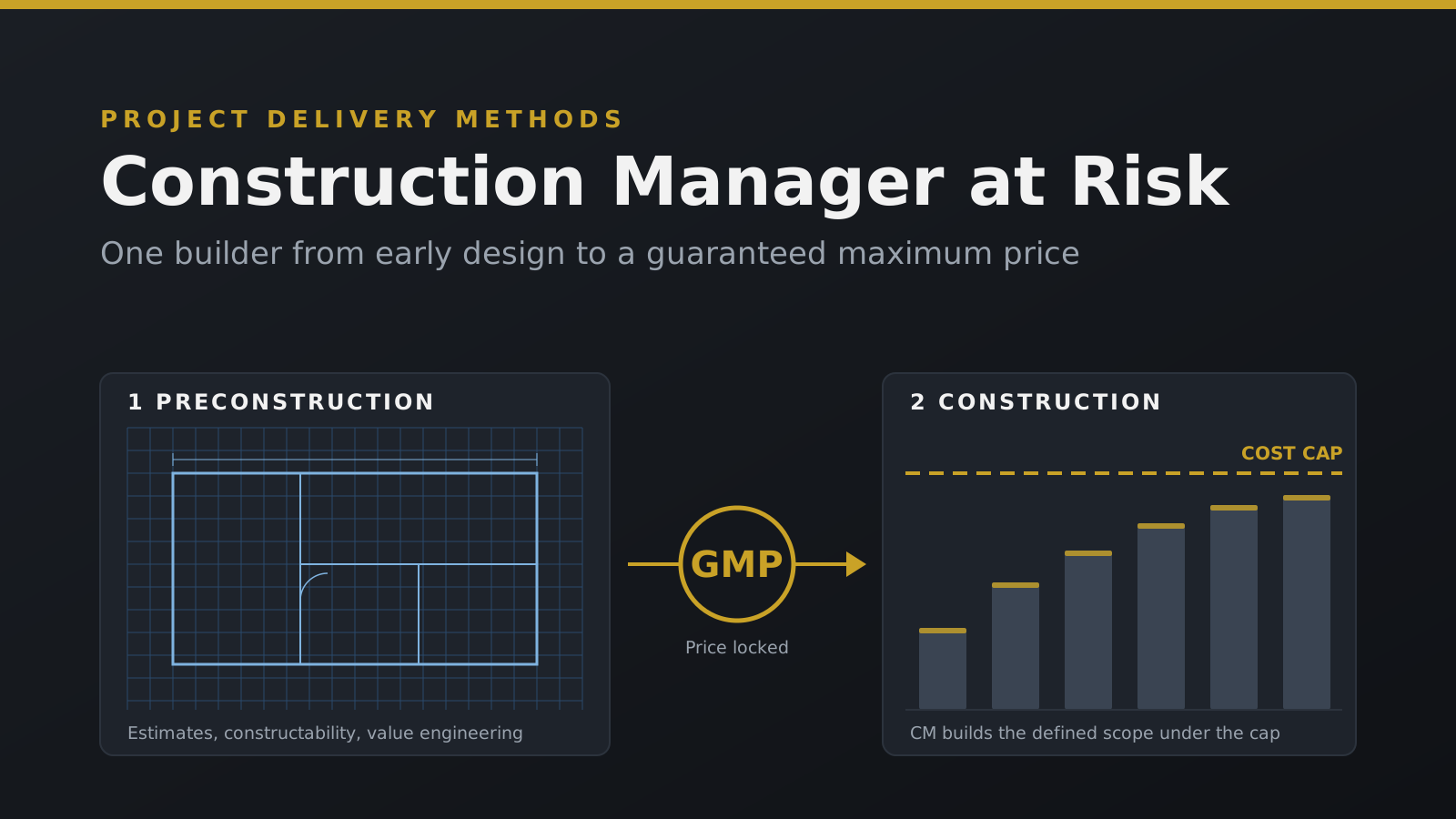
Construction management — a construction manager acts as the owner's representative, providing full cost transparency, managing the subcontractor bid process, and delivering a project within a guaranteed maximum price (CMAR) or as an agent for the owner (Agency CM). For owners managing complex builds, multi-site programs, or projects requiring deep oversight, CM is the delivery method that gives them the most control.
The right delivery method depends on project complexity, the owner's available bandwidth, and how much cost visibility matters to the decision-makers involved.
Industries That Drive Commercial Construction Demand
Commercial and institutional building construction spans a wide range of sectors. The projects that demand the most from a contractor's coordination capability tend to cluster in a few areas:
Hospitality and restaurants — opening-date-driven projects with tight MEP requirements, brand standard compliance, and FF&E coordination that must execute precisely. Hospitality construction is a specialized discipline within commercial contracting.
Hotels and extended-stay properties — renovation and new construction projects that require working around operational properties, managing guest impact, coordinating FF&E at scale, and satisfying brand standards from major flags.
Franchise development — multi-unit operators and franchise developers building out Dunkin', Arby's, Five Guys, Hampton Inn, and similar brands need contractors who understand the brand approval process, know how to execute prototype drawings efficiently, and can run rollout programs without sacrificing quality on any individual location.
Institutional and industrial — schools, municipal buildings, warehouses, and light manufacturing facilities require contractors familiar with the specific code requirements and long-lead systems that define those sectors.
Selecting a Commercial Contractor: What to Evaluate
When evaluating commercial contracting services for a project, the questions that matter most are:
Does this contractor have direct experience with this project type? A GC who builds warehouses is not automatically the right fit for a hotel renovation. Ask for references on comparable projects, such as the same use type, similar complexity, and similar scope.
When do they get involved? A contractor who shows up after design is complete has already missed the window to add the most value. The best commercial contractors push for preconstruction engagement because that's where they can protect the owner's budget and schedule before decisions get expensive to change.
Who manages the work on-site? The superintendent running your project is as important as the executives who pitched for it. Ask who will be there every day and what their background is on similar projects.
Ready to Talk About Your Project?
Stonehenge Construction Services delivers commercial construction services across hospitality, restaurant, hotel, franchise, institutional, and industrial sectors throughout the Southeast. If you have a project in planning and want to understand what the right delivery method looks like for your scope and timeline, contact our team to schedule a consultation.