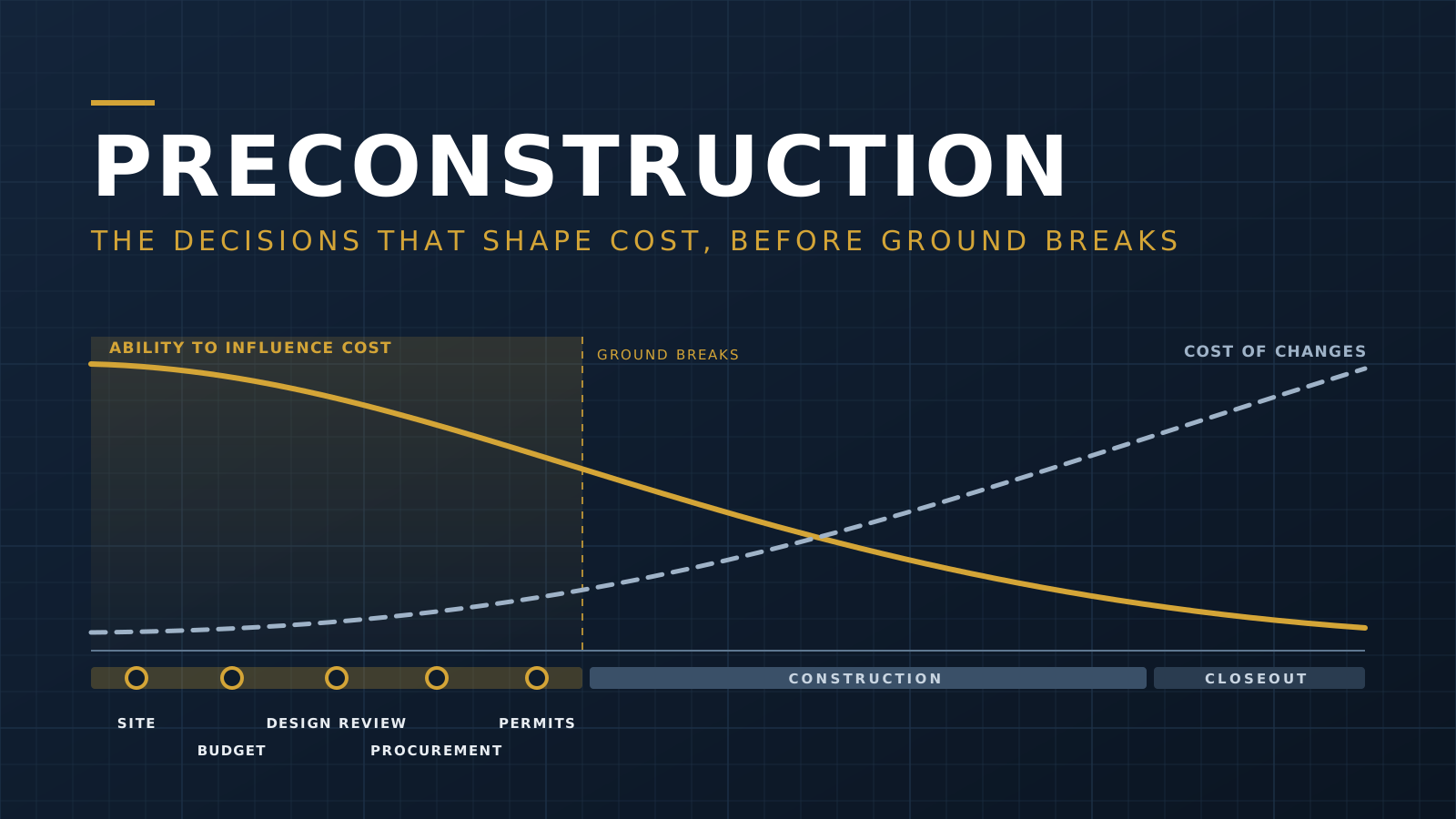
Building Information Modeling (BIM) is a digital process that creates intelligent 3D models containing geometric, spatial, and informational data about every component of a building or infrastructure project. BIM enables architects, engineers, contractors, and facility managers to collaborate throughout the entire project lifecycle, from initial design through construction and ongoing maintenance. This technology reduces errors by up to 40%, cuts project timelines, and provides a single source of truth that all stakeholders can access and update in real-time, fundamentally changing how construction projects are planned, executed, and managed.
Understanding Building Information Modeling in Modern Construction
Building information modeling represents far more than traditional CAD drawings or simple 3D visualization. At its core, BIM creates a comprehensive digital representation of a building's physical and functional characteristics, serving as a shared knowledge resource throughout the project lifecycle. Every element in a BIM model contains detailed information about materials, dimensions, costs, installation sequences, and maintenance requirements.
Consider a mechanical contractor installing HVAC systems in a commercial building. With traditional 2D drawings, they might discover conflicts with structural elements or electrical conduits only after arriving on-site. A BIM model reveals these clashes during the design phase, allowing the team to resolve conflicts digitally before any physical work begins. The contractor can visualize exactly how ductwork routes through the building, where hangers attach to structural members, and how systems coordinate with other trades.
The intelligence embedded in BIM models extends beyond geometry. Each component carries metadata that informs scheduling, cost estimating, energy analysis, and facility management. When an architect updates a wall thickness, the model automatically adjusts connected elements, recalculates quantities, and flags potential issues. This interconnected intelligence transforms construction from a reactive process into a proactive one.
How Building Information Modeling Works in Construction Projects
The BIM process begins during pre-construction when designers create detailed digital models using specialized software. Architects model the building envelope, structural engineers add load-bearing systems, and MEP engineers incorporate mechanical, electrical, and plumbing components. These separate models merge into a federated model that reveals the complete building in its digital form.
During the coordination phase, teams run clash detection algorithms that identify thousands of potential conflicts automatically. A structural beam might intersect with a ventilation duct, or electrical conduit might compete for space with plumbing risers. The software highlights these clashes, assigns them to responsible parties, and tracks resolution progress. This digital clash detection replaces the costly process of discovering and fixing conflicts in the field.
As construction begins, the BIM model transitions from a design tool to an execution guide. Field teams access the model on tablets and smartphones, viewing 3D representations of exactly what needs to be built at each location. They can measure distances, check elevations, and verify installation details without interpreting 2D drawings. When questions arise, they create digital markups directly on the model, which instantly notify the appropriate team members.
Project managers use the BIM model for 4D scheduling, linking each building component to construction activities and timelines. The model visually simulates construction sequences, revealing logistical challenges before they impact the schedule. Superintendents can see which areas need to be completed before subsequent trades can begin their work, optimizing the flow of labor and materials across the site.
The Multiple Dimensions of Building Information Modeling
Modern BIM extends beyond 3D geometry into additional dimensions that capture time, cost, and operational considerations. Understanding these dimensions helps construction professionals leverage BIM's full capabilities.
3D BIM provides the foundation with geometric modeling of building components in three-dimensional space. This visualization improves design communication and helps stakeholders understand spatial relationships. 4D BIM adds the time dimension by linking 3D elements to project schedules, enabling construction sequencing simulations that optimize logistics and identify potential delays before they occur.
5D BIM incorporates cost data, connecting quantities from the 3D model directly to pricing information. As designers modify elements, cost estimates update automatically, providing real-time budget impact analysis. Estimators generate accurate quantity takeoffs without manual measurements, reducing errors and accelerating the bidding process.
6D BIM focuses on facility management and sustainability, embedding operational data that building owners use for maintenance planning and energy management. The model becomes an asset management database containing warranty information, maintenance schedules, and replacement cycles for every building component. 7D BIM extends this further by analyzing lifecycle costs and sustainability metrics, helping owners make informed decisions about materials, systems, and operational strategies.
Implementing Building Information Modeling Successfully
BIM implementation requires strategic planning rather than simply purchasing software. Successful adoption begins with clearly defined goals that align with business objectives. Some firms prioritize clash detection and coordination, while others focus on cost control or facility management. Understanding these priorities guides software selection, training investments, and workflow development.
Creating standardized protocols ensures consistency across projects and teams. Organizations develop BIM execution plans that specify modeling standards, naming conventions, file structures, and collaboration procedures. These protocols define who creates which elements, how often models synchronize, and what level of detail each component requires at different project stages.
Training represents a significant investment that extends beyond software operation. Team members need to understand not just how to use BIM tools, but how BIM changes their workflows and responsibilities. Designers learn to model with construction methods in mind, while field teams develop skills in mobile model navigation and digital markup creation. This cultural shift often challenges organizations more than the technical aspects of BIM adoption.
Starting with pilot projects allows teams to develop expertise without risking major deadlines or budgets. Choose projects with supportive clients, reasonable complexity, and adequate timelines. Document lessons learned, refine processes, and gradually expand BIM use as team capabilities grow. This measured approach builds confidence and demonstrates value before committing to full-scale implementation.
Key Benefits of BIM for Construction Teams
Building information modeling delivers measurable improvements across every phase of construction. Clash detection identifies conflicts before construction begins, eliminating costly rework that typically consumes up to 30% of project labor. A mechanical contractor discovering a duct conflict in the model solves the problem in hours rather than days of field coordination and modification.
Enhanced collaboration stems from all stakeholders working from the same accurate model. When an electrical engineer updates panel locations, the architectural and structural teams immediately see those changes. This transparency reduces RFIs significantly, as team members can answer their own questions by exploring the model rather than waiting for responses from other disciplines.
Improved accuracy in quantity takeoffs and cost estimates helps construction firms submit competitive bids while protecting profit margins. The model calculates exact material quantities automatically, accounting for waste factors and installation complexity. This precision extends to labor estimates, as construction sequences visualized in 4D reveal the true scope and duration of work.
Project timelines compress when teams resolve design issues digitally rather than in the field. Prefabrication becomes more feasible because fabricators work from precise 3D models rather than interpreting 2D details. MEP contractors particularly benefit, fabricating entire assemblies in controlled shop environments and installing them as complete units on-site. This approach improves quality while accelerating installation.
Overcoming Common Building Information Modeling Challenges
Despite its benefits, BIM implementation presents several challenges that construction firms must address. The initial investment in software licenses, hardware, and training can seem daunting, particularly for smaller firms. However, viewing BIM as infrastructure rather than expense changes this perspective. The technology pays dividends over multiple projects as teams work more efficiently and reduce costly mistakes.
Resistance to change often emerges from experienced professionals comfortable with traditional methods. Address this by involving skeptics in pilot projects, demonstrating tangible benefits, and recognizing early adopters who help others succeed. Create opportunities for team members to see BIM in action on successful projects, making the advantages visible rather than theoretical.
Data management complexity increases with BIM adoption as file sizes grow and collaboration intensifies. Establish clear protocols for model organization, version control, and file sharing. Cloud-based platforms facilitate collaboration while maintaining single sources of truth, but they require adequate internet connectivity and data security measures.
Integration with existing systems and workflows requires thoughtful planning. BIM software must exchange data with estimating tools, project management platforms, and accounting systems. Evaluate integration capabilities during software selection, and budget time for developing these connections. Some manual data transfer may remain necessary, but automation should handle routine exchanges.
BIM Software and Technology Integration
Selecting appropriate BIM software depends on project types, team roles, and integration requirements. Autodesk Revit dominates architectural and engineering design, offering comprehensive modeling capabilities and extensive third-party support. Structural engineers often prefer Tekla Structures for its advanced steel and concrete detailing capabilities, while civil engineers utilize Autodesk Civil 3D for site development and infrastructure projects.
Coordination and clash detection happen in platforms like Autodesk Navisworks or Solibri Model Checker, which aggregate models from multiple disciplines and run sophisticated conflict analysis. These tools also support 4D scheduling visualization and construction simulation, helping teams plan logistics and identify sequencing issues.
Field teams need mobile-friendly BIM viewers that work offline and handle large model files efficiently. Solutions like BIM 360 or similar construction management platforms provide field access to coordinated models, enabling workers to verify dimensions, check installation details, and create issues directly within the 3D environment.
Integration with construction management software creates seamless workflows that connect design, coordination, and execution. Project teams benefit when BIM models link to task management, RFI tracking, and quality control processes. This connectivity ensures that everyone works from current information and that field observations flow back to designers when necessary.
The future of building information modeling continues evolving with artificial intelligence, machine learning, and reality capture technologies. AI algorithms will increasingly automate clash detection, optimize designs for cost and constructability, and predict maintenance needs. Laser scanning and photogrammetry will create as-built models that compare against design intent, ensuring quality control and feeding accurate data into facility management systems. As these technologies mature, BIM will become even more central to how the construction industry operates.